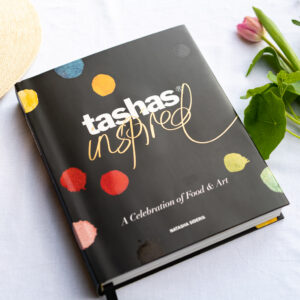

In our cookbook tashas Café Classics, Natasha shares some of her favourite recipes and the most popular dishes from the café menus. Here is one from the book that you can make at home.
“My friends Candice and Sarah are forever trying to convince me that just about everything you can think of – from the alphabet to alphabet soup – was invented by the Lebanese before the Greeks. We’ve spent many nights debating and Googling into the wee hours. For once though, I’ll have to give it to them: labne is Lebanese. It’s a delicious cheese made from yoghurt and so easy to make. Some say my love for labne is just another excuse to use yoghurt. Maybe, but what I really want to know is, if I use Greek yoghurt, is the labne still Lebanese?”
SERVES 4
Labne
ALLOW FOR 24-HOUR PREPARATION TIME
400 g Greek yoghurt
1 tsp salt
Lentil Salad
800 g brown lentils, cooked or use 2 tins
4 medium tomatoes, diced
6 cherry tomatoes, sliced
2 handfuls mint leaves, chopped
2 red onions, chopped
60 ml olive oil
40 ml balsamic vinegar
salt and pepper
16 pickled beetroot, sliced
20 asparagus spears, blanched
30 ml lemon juice
handful micro greens
Make the labne the day before you want to use it.
Labne is made by straining yoghurt in a muslin cloth. Use a plain white cloth – stripes and prints colour the cheese. Line a colander with the cloth, put the yogurt in the middle, fold the corners together and tie it to the middle of a wooden spoon. Let it hang from the spoon over a deep bowl for at least 24 hours. The longer you hang it, the thicker it gets. Don’t use fat-free or low-fat yogurt, the water content is too high. The salt gives the labne a more cheese-like flavour.
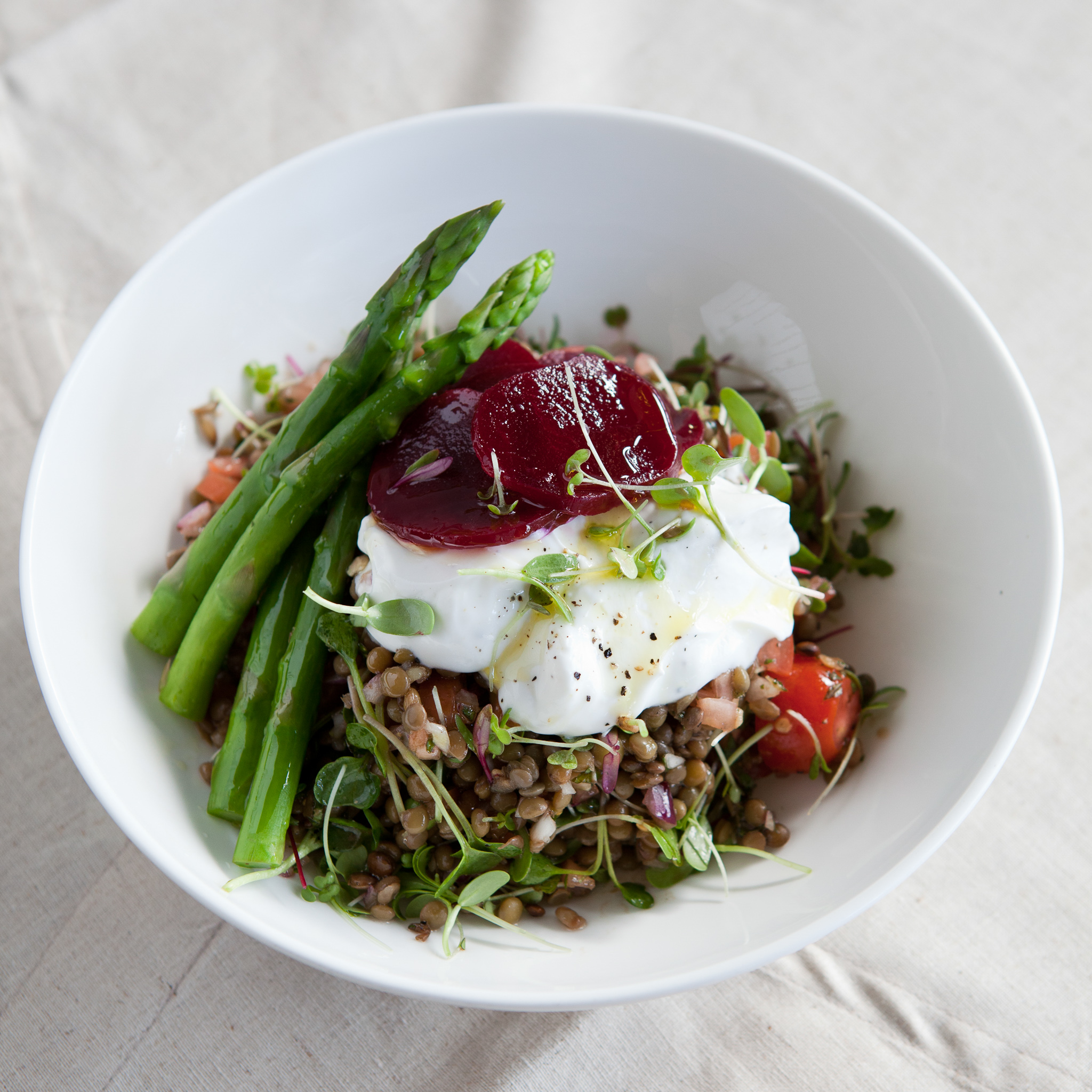
To make the lentil salad, combine the freshly cooked or tinned lentils, tomatoes, mint and onion in a bowl. Stir in the olive oil and balsamic vinegar, season with salt and pepper. Divide the salad into 4 serving bowls. Place a dollop of labne on top of each portion and top with the beetroot, asparagus and lemon juice.
Garnish with micro greens.